
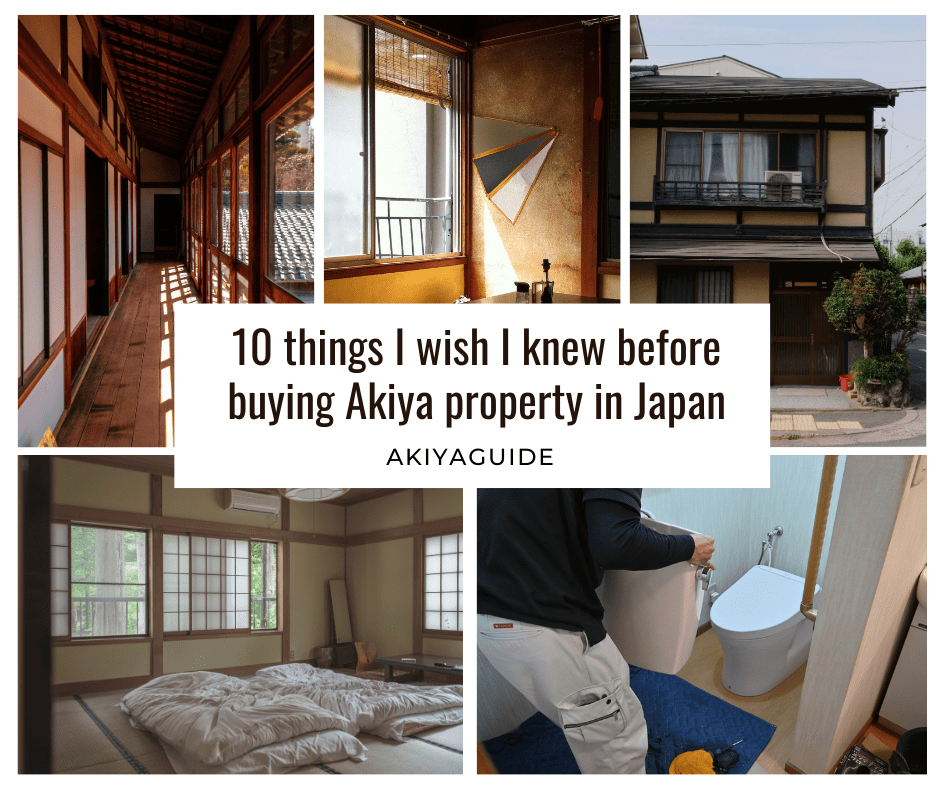
When we started dreaming of our own house in Japan, there was quite a lot of things we had to find out on our own. Akiya, or abandoned houses, offer an great affordable entry point into the Japanese property market. My own journey started with similar hopes, and while rewarding, there were definitely things I wish I had known upfront. If you’re considering to buy an Akiya, here are 10 things I wish I knew before I got my property!
1. Renovation costs can be huge
The low purchase price of an Akiya is often just the tip of the iceberg. Many of these homes are old and in significant disrepair, requiring extensive renovations to bring them up to modern living standards or even basic safety. What seems like a bargain upfront can quickly turn into a financial black hole once you factor in structural repairs, new plumbing, electrical work, and general aesthetic upgrades. Budget far more for renovations than you initially anticipate.
2. Japan’s natural disasters are a constant threat
Earthquakes, typhoons, tsunamis, heavy snow, and floods are not just occasional events; they are a regular part of life in many parts of Japan. Older Akiya, especially those built before stringent 1981 earthquake codes, may be particularly vulnerable. It’s crucial to research the specific disaster risks of your chosen location and factor in potential costs for reinforcement or the risk of significant damage.
An overview of natural disaster risks and weather patterns by prefecture, with guidance on safe locations for akiya’s can be found on page 5&6 in my guidebook here.
3. Property ownership doesn’t grant residency
A common misconception is that buying property in Japan will automatically grant you a visa or residency. Unfortunately, this is not the case. You’ll still need to meet existing visa requirements and apply through the proper channels. Property ownership alone does not provide any immigration status or rights, so managing your legal stay in Japan remains a separate, vital process.
4. Don’t think about getting a loan – cash is king
For foreigners, particularly those without permanent residency, securing a mortgage from a Japanese bank is nearly impossible. This means you’ll likely need to pay for your Akiya property entirely in cash. You must have the full purchase amount readily available upfront, which can be a significant sum even for inexpensive properties, and makes budgeting for renovations even more critical.
5. Finding the right realtor is a major hurdle
The success of your Akiya purchase heavily relies on your realtor. However, finding one who speaks English, understands that foreigners without residency can buy property, and is knowledgeable about the nuances of Akiya is extremely challenging. Many realtors are not familiar with these specific transactions, may not speak English fluently, and might even require additional fees for low-priced Akiya properties to make it worth their time.
Steps on how to find and approach realtors in Japan without using an agency can be found on page 8 & 9 in my guidebook here.
6. Expect significant property condition issues
Beyond general wear and tear, Akiya properties often come with serious hidden problems. Think widespread termite infestations, rusted-out roofs, sagging floors, and the presence of asbestos in homes built before the early 1990s. Many purchases are “as is,” meaning you, the buyer, bear the full risk and cost of these unexpected repairs. Thorough inspection is paramount, but some issues only surface after purchase.
All the red flags you should look out for when viewing houses can be found on page 11 in my guidebook here.
7. Rural akiya often lack essential amenities and transport
While a remote, quiet life might sound idyllic, many cheap Akiya are located in areas with declining populations, meaning a severe lack of essential services. You might find yourself far from supermarkets, hospitals, or even reliable public transport. Daily life can become a significant challenge if you’re not prepared for limited accessibility and a potential need for a car.
8. Property lines and road access can be deceiving
One of the trickiest issues can be the property’s legal boundaries and access. What you perceive as your land or driveway might actually belong to a neighbor. Critically, Japanese law often requires properties to have at least two meters of road access to be legally rebuilt. If your Akiya lacks this, you might be unable to demolish and construct a new home, effectively rendering the land worthless for future development.
Information about the property line can be found on page 12 in my guidebook here.
9. The market is largely offline, making your search tough
Unlike many Western countries, about 80% of Japan’s property market, especially for older and cheaper Akiya, operates offline. Many properties aren’t listed on major websites, and even when they are, listings often lack interior photos or detailed information. This makes initial research and finding properties incredibly challenging, often requiring on-the-ground presence and local connections.
How to start looking for houses and which platforms to use can be found on page 10 in my guidebook here.
10. The Government has the final say on ownership transfer, which can be denied
Even after you’ve completed the buying process and submitted all documents, the Legal Affairs Bureau (the relevant government authority) holds the final power to register your ownership. Your registration request can be denied or significantly delayed due to a range of issues, such as incomplete or incorrect documentation, unresolved disputes over property boundaries, unpaid taxes or debts tied to the property, or if the property is subject to legal restrictions or liens.
While these hurdles might seem daunting, buying an Akiya property in Japan is far from impossible. There is a methodical way to approach the process, one that can lead to success even for foreigners with limited budgets and no prior residency. My own experience stands as testament to this; we successfully acquired our dream Akiya in just a few months, for under $30,000 USD. If you’re ready to learn how to navigate these challenges effectively and turn your dream into a reality, my ebook, “How to buy Akiya Property in Japan in 8 Practical Steps,” outlines the exact steps we took to achieve it.
 Akiya Guide
Leave a comment